Skip to content

Hiking · 32 products

Best Hiking Poles UK

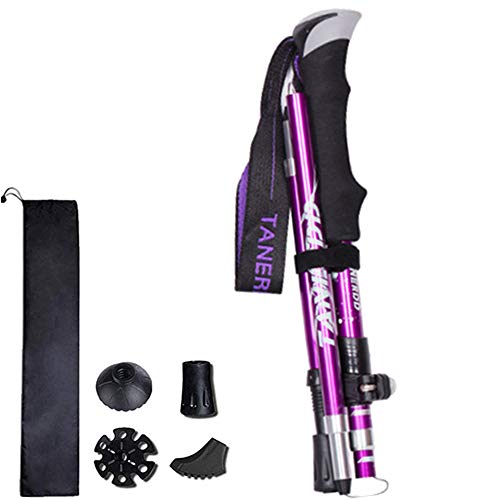
We track 32 hiking poles on Amazon UK, priced from £5.99 to £59.97. Half of them sit at or below £25.95. 14 brands are represented; 2 of them tie for the most listings with 6 listings apiece. The cheapest is the Tent Pole Storage Bag, 65 x 35 cm Protective Camping Rod Bag with Shoulder Straps, Drawstring Carry Bags for Hiking Poles, Fishing Rods, and Tripods at £5.99, the dearest the Foxelli Carbon Fiber Walking Poles – Lightweight Collapsible Hiking Poles with Cork Grips, Quick Flip Locks & All-Terrain Accessories – Adjustable Height Hiking Sticks for Men & Women at £59.97. Ranking is by verified rating and review volume — never by commission.

Products

Prices and availability are accurate as of the date shown and may change. Always check the current price on Amazon UK before buying.

As an Amazon Associate we earn from qualifying purchases.

Why these picks

  • Ordering is mechanical: customer rating first, then review count, then a stable tie-break. Commission is not an input, and no listing can pay for a position.
  • 0 of the 32 listings carry a customer rating. Unrated listings are not hidden — they sort to the bottom, where you can still see them.
  • No brand quota is applied. TREKOLOGY holds 6 of the 32 places because that is what the catalogue contains, not because it was favoured.
  • Prices and availability were last read from Amazon UK on 2026-11-01; 27 of the 32 were in stock at that point. Always check the live page before buying.
  • Pole length must align with your height and stride – a general rule is to have the pole end at approximately wrist level when standing upright.
  • The grip material should provide adequate friction for a secure hold, even in wet conditions. Avoid overly smooth materials that can cause slippage.
  • Shaft diameter contributes to overall comfort and stability; wider shafts often offer more leverage and reduced vibration.
  • The pole's weight is a key consideration – lighter poles are easier to carry over long distances but may sacrifice some strength or durability.

Buying guide

What to look for

Pole Length & Your Height

The length of your hiking pole significantly affects comfort and stability. A pole that's too short will force you to lean forward, potentially straining your back. Conversely, a pole that's too long can make it difficult to maintain balance on uneven terrain. Measure from the floor to your wrist when standing tall – this is roughly what you need.

Bore Axis & Grip Comfort

The angle of the pole's shaft (the bore axis) relative to your hand impacts how naturally you can use it for pushing and pulling. A poorly aligned bore axis causes discomfort, particularly on longer hikes. Focus on a grip that feels secure and doesn't cause blisters – consider the diameter and material.

Shaft Stiffness - Stability vs. Fatigue

A stiffer pole provides more stability when trekking poles are used for self-arrest, but can transmit more jarring forces through your arm. A softer shaft absorbs some of this impact, reducing fatigue over long distances. Consider how you'll primarily use the poles.

Telescope Sections – Adjustability & Weight

The number of sections a pole telescopes into affects its adjustability for different terrain and its overall weight. More sections offer greater flexibility but add to the weight; fewer are lighter but less adaptable. Think about the trails you'll be tackling.

Common mistakes

  • Buying poles that are too long for my height — Many buyers assume longer poles are always better. However, a pole that's excessively long will make it difficult to maintain balance and can lead to fatigue. Measure your wrist height as described above – this is the most reliable guide.
  • Ignoring grip comfort — A poorly designed grip can quickly turn a comfortable hike into an uncomfortable one. Pay attention to the diameter, material, and shape of the grip; consider adding padding if needed. Don't assume a 'standard' grip will suit everyone.
  • Selecting a pole with excessive weight — While lightweight poles are desirable, don't sacrifice durability for minimal weight savings. Ensure the pole is strong enough to withstand the loads you'll be applying while hiking – check the listed maximum load capacity.
  • Not considering terrain — A pole designed for rocky mountain trails won't be ideal for a gentle woodland walk, and vice versa. The best poles offer adjustable length AND shaft stiffness to suit varied conditions.

Frequently asked questions

How much do hiking poles cost in the UK?
The 32 hiking poles on this page run from £5.99 to £59.97, averaging £29.65. Half of them are listed at or below £25.95. Amazon UK prices move, so treat these as the figures at the last catalogue refresh rather than today's shelf price.
Which brands make hiking poles?
14 brands appear in this selection: TREKOLOGY (6), Trekrite (6), TheFitLife (5), COVACURE (4), Wsobue (2) and Almineez (1), plus 8 more. The number in brackets is how many listings each has here, not a ranking of the brands themselves.
What does 'telescoping' mean in the context of hiking poles?
Telescoping refers to the ability of a pole to be adjusted into different lengths. This allows you to adapt the pole's length for varying terrain and your individual stride.
How do I know how much weight my hiking poles can handle?
The maximum load capacity is typically printed on the pole itself or in the product description. Don't exceed this limit – it's a safety precaution.
Should I buy adjustable or fixed-length poles?
Adjustable poles offer greater versatility for navigating varied terrain, while fixed-length poles can be lighter and more stable on flat ground. Consider your typical hiking conditions.
What are the different types of pole tips available and how do they affect performance?
Pole tips transfer energy efficiently to uneven terrain – a blunt tip will absorb force, while a pointed one delivers it more directly. The material (usually carbon or aluminium) affects weight and durability. Check the listing for details on the tip’s construction; some are designed for firmer ground, others for softer surfaces. You can assess the tip's suitability by observing its shape and how it conforms to the terrain you plan to hike.

Shop by brand

More in Hiking

More hiking categories

Related guides

From the blog